
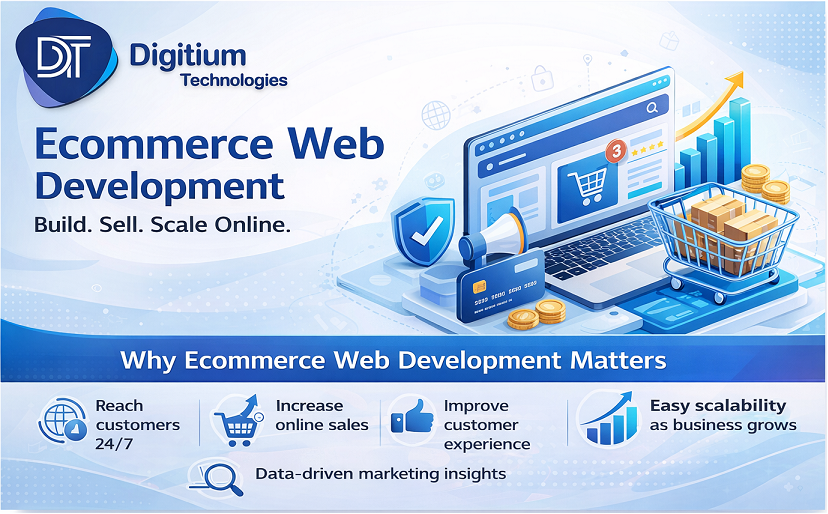
In today’s digital world, ecommerce web development plays a major role in how businesses sell to customers online. As more people prefer shopping from their phones and computers, strong ecommerce websites are essential for success. In 2025, more companies are investing in custom online stores and smarter shopping technology to stay competitive.
Recent industry data shows global ecommerce sales are expected to continue rising, reaching over $6.5 trillion in 2025. This growth is driving demand for ecommerce web development that is faster, user-friendly, and secure, so businesses can meet customer expectations and handle more sales.
Why Ecommerce Web Development Matters
Good ecommerce web development means more than just listing products online. It includes creating a smooth shopping experience, integrating secure payment systems, and making it easy for customers to find what they want.
A common pain point many business owners share is high cart abandonment. Users often leave websites when the checkout process is confusing or slow. Efficient ecommerce web development solves this by building intuitive interfaces and fast checkout flows, which increases conversions and sales.
Small business owner Maria Gomez recently redesigned her online store with a mobile-first ecommerce platform. After the redesign, she saw a 35% increase in completed purchases because customers could check out faster on their phones. This real user experience highlights how vital good design and development are to ecommerce success.
Trends in Ecommerce Web Development
1. Mobile-First Design
In 2025, more than half of online shopping happens on mobile devices. Developers are focusing on mobile performance and responsive design so websites look great and work smoothly on phones and tablets. This mobile focus is a key part of modern ecommerce web development.
2. Headless Commerce
Headless commerce separates the front end of a website (what users see) from the back end (how data is managed). This approach allows faster updates and better personalized experiences. Many growing brands are using headless systems to deliver faster, more customizable sites as part of their ecommerce strategy.
3. AI and Chatbots
Artificial intelligence tools like chatbots are being built into ecommerce sites to support customers 24/7. For instance, ebooks retailer ReadMore integrated an AI assistant that helps users find book recommendations and track orders. This improved customer satisfaction and reduced support tickets, showing how intelligent automation supports successful ecommerce web development.
Challenges and Solutions
Despite the benefits, ecommerce web development can be challenging for new businesses. Technical skills, hosting decisions, and security requirements can be confusing at first.
To address this, many companies choose hosted ecommerce platforms like Shopify and BigCommerce because they handle updates, security, and hosting. Other businesses work with professional developers for custom solutions tailored to their brand and long-term growth.
According to a recent survey of online retailers, 68% of high-growth businesses said they plan to invest more in web development and user experience in the next year — a clear sign that strong ecommerce development is linked to long-term success.
Looking Ahead
As customer expectations evolve, ecommerce web development will continue to be a critical factor for online business growth. From mobile-friendly sites to personalized shopping experiences and secure checkout systems, the right development approach can boost sales and strengthen customer loyalty.
Whether you run a small boutique or a large online brand, investing in quality ecommerce web development now can help your business grow and adapt in the future.
